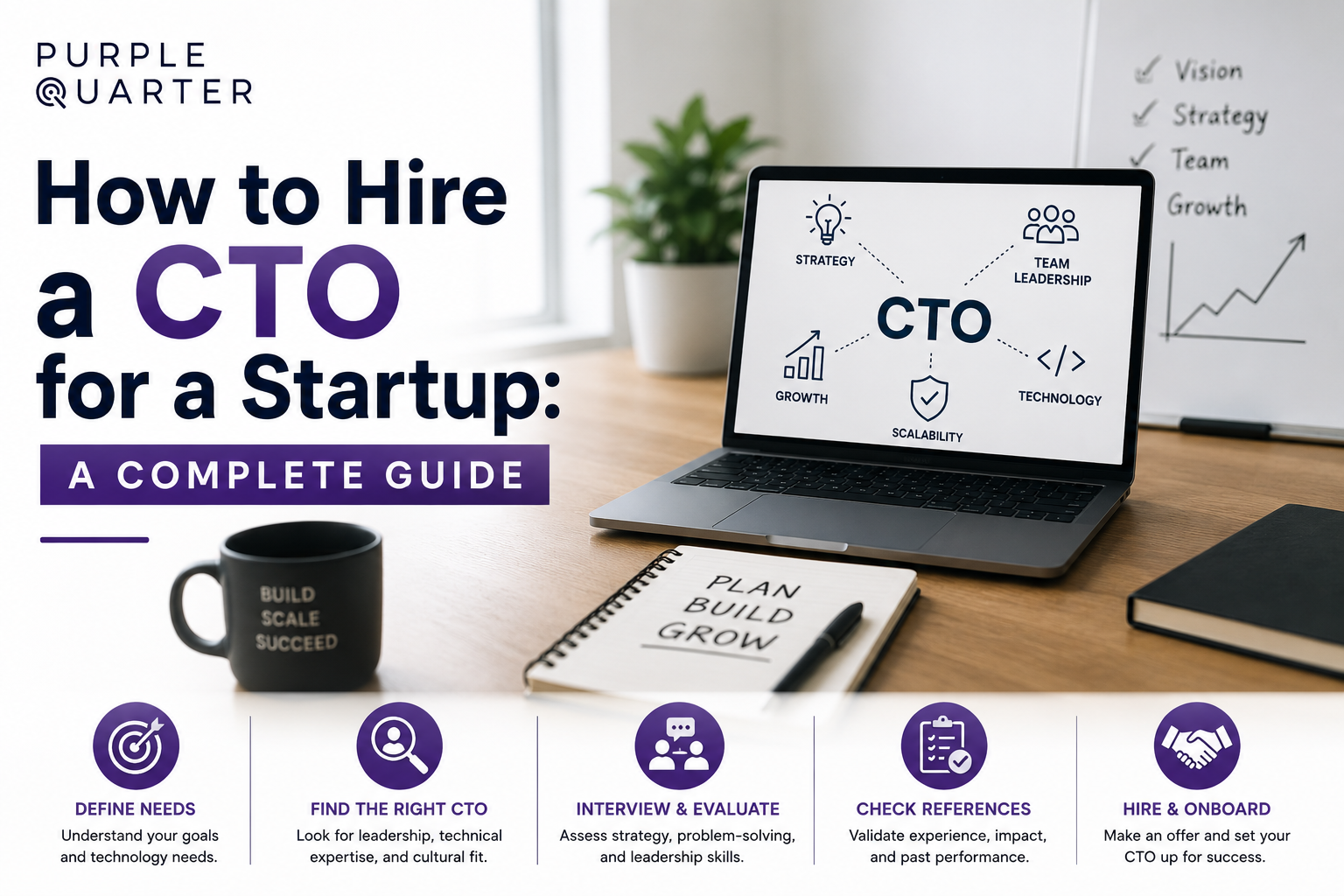
By Admin | 7/29/2026


A Fractional CTO provides executive technology leadership without the commitment of a permanent hire.
A full-time CTO is best suited for businesses where technology has become central to long-term growth.
Budget, engineering complexity, and business stage should guide the hiring decision.
Many startups begin with a part-time CTO before transitioning to a permanent executive.
The best investment depends on business needs, not just executive cost.
When technical issues affect revenue, hiring slows, or investors ask tough questions, you need senior leadership. But a full-time executive is often overkill for a growing startup. A fractional CTO is the perfect middle ground, offering expert guidance on scaling, security, and strategy without the full-time cost. Timing this decision is a key hiring consideration
In this blog, we will cover the differences between a fractional CTO vs a full-time CTO and what the right fit for your organization is.
Most leaders want to know what a fractional CTO is and if they will be a good fit for their organization. A fractional CTO, also known as a part-time CTO, is an executive who works for an organization on a part-time or contractual basis. Instead of joining the organization full time, they offer their strategic guidance and leadership for a defined number of days a month.
A full-time CTO is an executive who works full-time for a company and is responsible for being a technical expert, engineering leader, and innovator. They are a permanent member of the business and fully engaged with the company culture, recruitment chats, business funding discussions, product planning, and business development - a scope shaped by the evolving CTO role.
The main factor of differentiator between CTO vs full-time CTO is commitment rather than capability. A fractional CTO is primarily dedicated to strategic leadership for business, whereas a full-time CTO is focused on technical discussions throughout the day, directly leads engineering teams, and has a say in the long-term business strategy , reflecting how vital a CTO is to the business.
Factor | Fractional CTO | Full-Time CTO |
|---|---|---|
Engagement | Part-time or project-based/contractual | Permanent employee of the company |
Best for | Early-stage startups, SMEs | Large, scaling and mature businesses |
Leadership focus | Strategy and advisory | Strategy and execution |
Team involvement | Limited operational oversight | Daily leadership of engineering |
Investment | Lower monthly commitment | Salary, benefits, and equity |
Scalability | Flexible | Long-term organizational growth |
The fractional CTO rates depend on experience, location, roles, and responsibilities. One of the primary reasons CTO as a service is becoming more popular is because organizations can opt for executive leadership and expertise as and when required.
The recruitment of a full-time CTO includes salary, bonuses, and potentially equity via ESOP. The salary of a full-time CTO will vary depending on the company stage, location, engineering complexity, and expectations of the CTO.
Whether to hire a fractional CTO or a full-time CTO is entirely dependent on the business needs. If the startup needs a visionary who can provide strategic guidance, technology validation, and executive oversight, the fractional CTO can provide better ROI, while when the organization needs to create long-term value, the full-time CTO is more appropriate.
Benefits of hiring a fractional CTO include:
Flexibility
Efficiency
Less investment
Clear access to the executive leadership team
Cons of hiring a fractional CTO include:
No full-time involvement
Low levels of depth of engagement
Integration challenges
Slower turnaround time
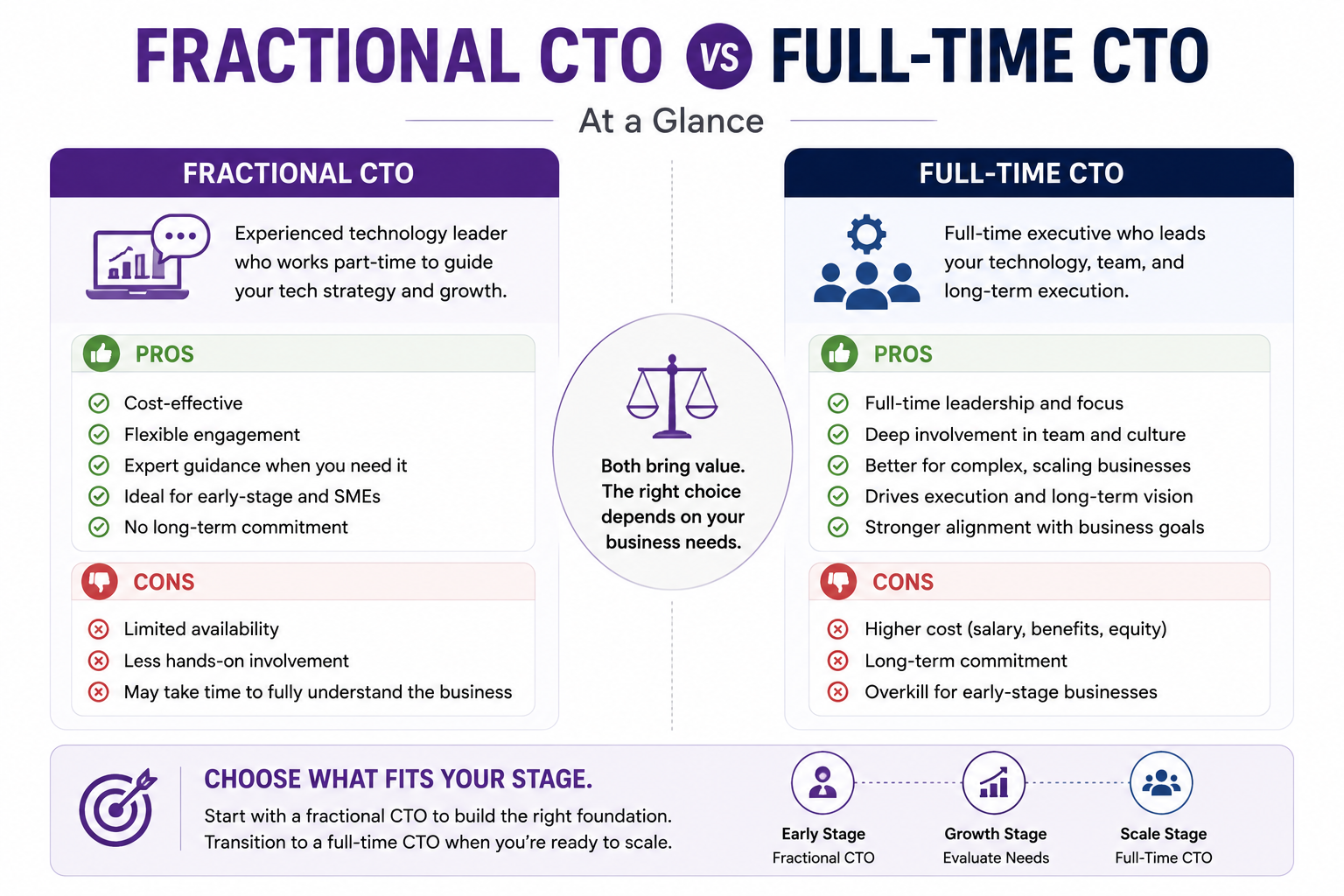
Benefits of hiring a full-time CTO include:
Consistent leadership
Full-time availability
Deep immersion
Cons of hiring a full-time CTO include:
Substantial salary
Bonus and performance incentives and equity
Understanding when to hire a fractional CTO depends on the business expectations.
A fractional CTO makes more sense for early-stage startups, as the budget is limited; hence, there is no long-term financial commitment.
Another advantage to hiring a fractional CTO is that they're an ideal option for non-technical founders who need somebody with technical know-how and an expert advisor.
If a company has a well-established product but it just doesn't have the full resources of technology, this is where the full-time CTO comes in. Periodic planning sessions and strategic reviews are sometimes all that is needed to ensure technology is in line with business.
An interim CTO helps bridge the gap during executive transitions, acquisitions, or in cases involving restructuring. Organizations hire an interim CTO instead of rushing into a permanent full-time CTO.
Hiring a full-time CTO is a better option when technology and engineering influence a major part of an organization. Growing engineering organizations, multiple product lines, international expansion, or complex customer environments typically require dedicated executive leadership that extends beyond advisory support.
Most startups cannot afford to hire a CTO for full-time immediately. They begin with a fractional CTO and then move their way up to the full-time CTO. This approach balances financial discipline along with long-term planning.
Also Read: How to Hire a CTO for a Startup?
A virtual CTO delivers leadership remotely, regardless of working hours. A Fractional CTO is defined by part-time executive involvement and may work remotely or onsite. CTO as a service is a flexible engagement model that gives businesses access to technology leadership on demand, often through consulting or advisory arrangements. Organization can also approach to CTO executive search firm with leadership services.
When organizations require strategic direction, flexibility, or temporary leadership, they should consider a fractional CTO. If the technology is a big part of the business, vital to growth, and engineering teams need constant guidance and expertise, or if long-term execution requires steady executive participation, the clear choice is a full-time CTO.
The decision between a fractional CTO vs a full-time CTO is a matter of leadership model for an organization. Companies that wisely connect technology leadership with their current requirements make better choices and pave the way for long-term expansion.
Purple Quarter is a leading executive search firm that helps founders, boards, and investors identify exceptional technology leaders aligned with their business stage, culture, and long-term vision. Partner with Purple Quarter to find your next transformational tech leader.
A fractional CTO vs a full-time CTO differs mainly in commitment. A fractional CTO works part-time, while a full-time CTO leads technology daily.
Fractional CTO cost depends on experience, engagement scope, and company stage. Businesses pay only for strategic leadership without full-time executive expenses.
Yes. A fractional CTO for startups provides experienced technology leadership, strategic guidance, and engineering oversight without the commitment of a permanent executive.
Move from a Fractional CTO to a full-time CTO when engineering teams expand, technology strategy becomes central, and daily executive leadership is needed.
A virtual CTO works remotely, while a Fractional CTO is defined by part-time engagement. A fractional CTO may work either remotely or onsite.
Fractional CTO responsibilities typically require one to three days weekly or a few hours monthly, depending on business complexity and priorities.