A chief technology officer aligns technology strategy with long-term business objectives.
Modern CTO roles and responsibilities extend beyond engineering to include leadership, innovation, budgeting, and stakeholder communication.
Strong CTO skills combine technical expertise with business acumen, communication, and strategic thinking.
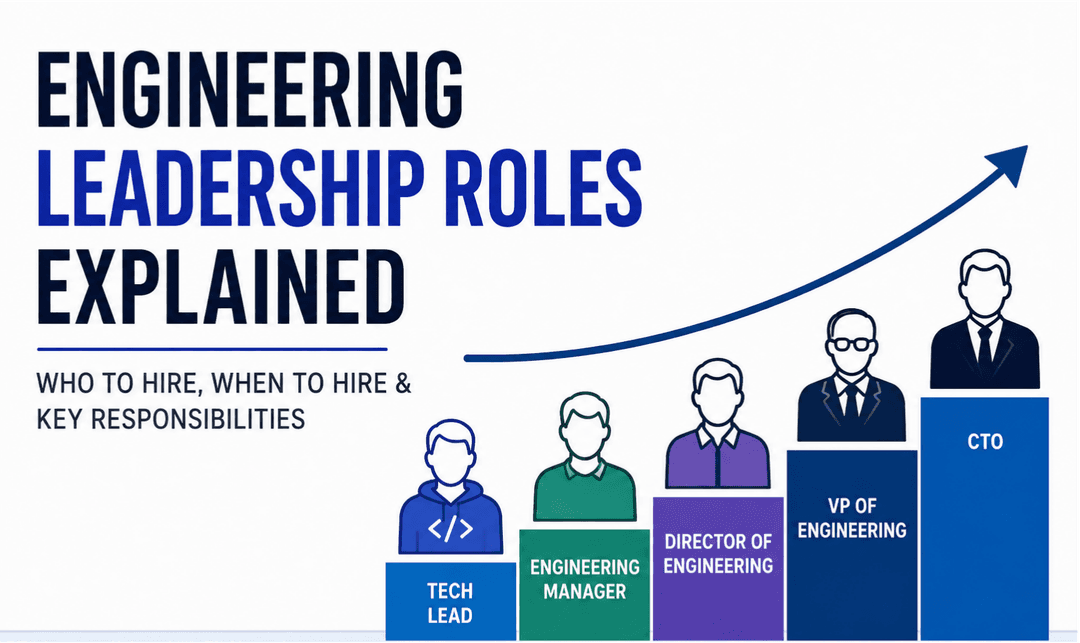
The CTO career path typically progresses through engineering, leadership, and executive management roles.
As emerging technologies continue to reshape industries, the future of CTO leadership will increasingly center on driving business transformation through technology.
The modern-day CTO is tasked with leading product innovation, engineering team construction, investor and board communication, and readiness for new technologies such as AI. The CTO roles and responsibilities are more prevalent than ever and vital to founders, future tech leaders, and growing businesses.
A chief technology officer (CTO) is an executive who sets the direction of the organization's technology and makes technology investments work for the business. Every founder will answer differently when asked what a chief technology officer is. That's because the job changes as the business grows.
So, what does a CTO do? A CTO integrates technology, product, and business strategy and assists the organization in being prepared for future growth. They make engineering choices, assess emerging technologies, help to manage technical risks, and help to develop engineering teams that provide long-term value.
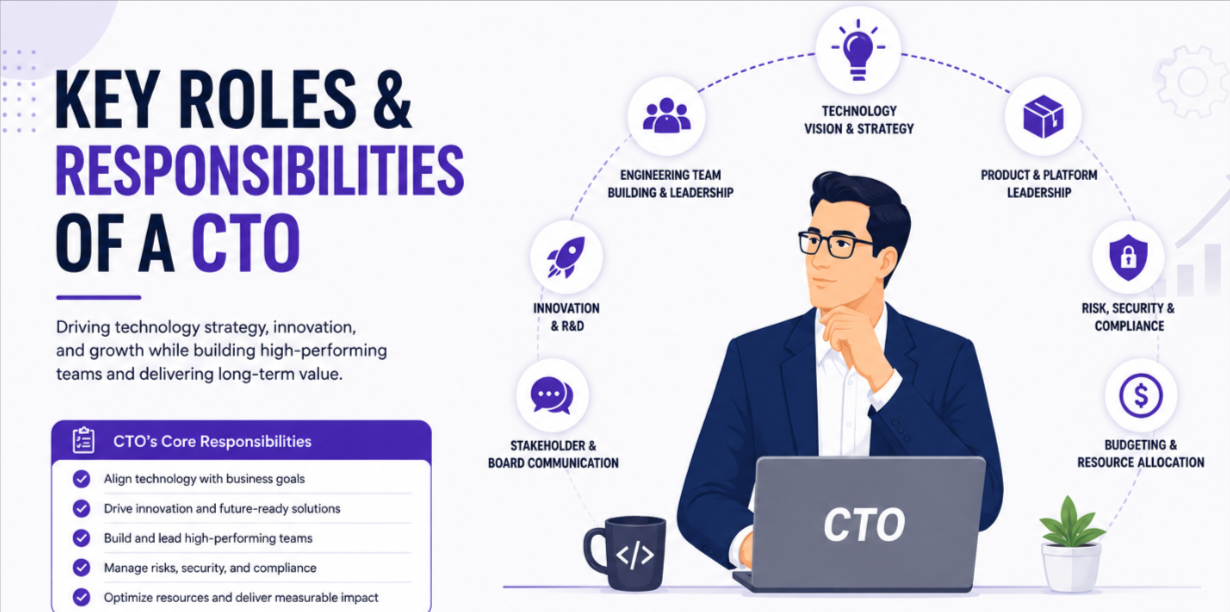
They ensure that the tech direction aligns with the company's long-term goals. It could be about the use of artificial intelligence, cloud infrastructure, or platform modernization.
CTOs have to strike the right balance between innovation, scalability, performance, and delivery time in collaboration with the product leaders.
A CTO is responsible for building an engineering organization. They also influence the engineering culture, mentor and develop new leaders, design development practices, and enable teams to always produce quality products.
A CTO examines trends, allocates resources to research and development, and assists organizations in trying out new ideas without losing their grip on action.
A CTO collaborates closely across teams with security, legal, and compliance to safeguard customer information, minimize operational risk, and ensure the enterprise can meet changing regulatory demands.
Decision-makers invest a lot of time in making the technology decision and then making it a business decision. They require a sense of focus regarding where to invest, the risks of technology, product scalability, and the role of engineering in driving long-term growth.
A CTO's job is to weigh options for investment. They need to make sure that resources are spent on something that brings value to a business.
CTO skills include having a strong grasp of software architecture, cloud platforms, cybersecurity, artificial intelligence, data infrastructure, and contemporary engineering methods.
A CTO should possess excellent leadership traits like communication, decision-making, active listening and adaptability skills. The greater an organization gets, the more important it becomes to lead and inspire other people.
By grasping the markets, customers, and financial priorities, CTOs can make technology choices that align with business results rather than engineering outcomes.
There are different types of CTOs that depend on the size and priorities of the organization. In startups, a CTO has to wear many hats, including architect, hiring, and product strategy. In bigger companies, the job gets more specific, and there's more focus on long-term innovation and executive leadership.
Also Read: The Difference Between Fractional CTO vs Full-Time CTO
Purple Quarter places CTOs, CPOs and senior technology leaders for high-growth companies.
Find your tech leaderA CTO defines technology strategy and innovation; the Chief Information Officer (CIO) is the person responsible for the internal technology, IT systems, and enterprise operations. A Chief Product Officer (CPO) sets up the vision of the product and its value to the customer, whereas a VP of Engineering manages engineering delivery and execution. There is close collaboration between these roles, but they are used to address different business challenges.
There is a vast difference between the roles of a startup CTO and an enterprise CTO. The stages of product development, engineering hiring, fundraising, and conversations with customers are all part of the game that startup CTOs play. Enterprise CTOs devote more time to governance, innovation strategy, executive leadership, and operating a large technology business in a multi-team and multi-region setup.
The CTO salary can differ greatly based on factors such as industry, company lifecycle, geography, and organizational complexity. For early-stage start-ups, salary-plus-equity is often the preferred approach to hiring seasoned leaders; for more established companies, however, executive compensation and performance bonuses are more important.
Many employees wonder how to become a CTO. A CTO requires a strong background in computer science, engineering, or a related field, which is preferred, but experience is appreciated. Technical credibility can be enhanced with certifications in cloud, cyber, AI, or enterprise architecture.
Future CTOs are better off with the software and infrastructure development, product engineering, and system architecture experience. Different technologies help develop judgement, which is mostly useful in executive decision-making.
Being technically or professionally qualified does not necessarily make a person qualified to lead in executive positions. As careers advance, managing teams, mentoring future leaders, making strategic decisions, and communicating with stakeholders are vital.
In the technology community, building relationships presents opportunities that technical expertise alone can't provide. These activities build a CTO career trajectory over time through speaking at industry events, mentoring founders, contributing to technology communities, and sharing insights.
Common challenges CTOs face are the following:
Recruiting engineering talent
Technical debt
Technology and business goals integration
Cost-control
Cybersecurity threats
Decision-making
A modern CTO is expected to impact not just product decisions and customer experience, but also organizational development and executive decision-making. In an environment where technology is at the heart of the business's competitive edge, the future of the CTO involves investing more time in driving business strategy than driving technology. Whether you're hiring your first CTO or strengthening your executive leadership team, finding the right fit requires more than technical expertise.
Purple Quarter, CTO executive search firm partners with founders, boards, and investors to identify exceptional technology leaders who align with your business goals, growth stage, and long-term vision. Find your next tech leader with Purple Quarter.
CTO roles and responsibilities include defining technology strategy, leading engineering teams, driving innovation, managing technology risks, and aligning technology with business goals.
Essential CTO skills include technical expertise, strategic thinking, leadership, communication, cybersecurity knowledge, business acumen, and the ability to build high-performing teams.
In a CTO vs CIO comparison, a CTO drives product technology and innovation, while a CIO manages internal IT systems and operations.
Learning how to become a CTO involves gaining technical expertise, leading engineering teams, developing business acumen, and building executive leadership experience over time.
CTO salary varies by industry, location, company stage, and experience. Compensation often includes base salary, bonuses, equity, and long-term incentives.
A CTO defines technology strategy and innovation, while a VP of Engineering focuses on engineering execution, team management, and product delivery.
We place CTOs, CPOs and senior technology leaders for high-growth companies.
Occasional, high-signal analysis on hiring and leading technology teams.