Digital transformation is more than just a buzzword – it's a seismic shift that has redefined the way businesses operate. From cloud computing and data analytics to artificial intelligence and automation, technology has revolutionised the way we create, market, and deliver products and services.
Consider the rise of e-commerce giants like Amazon. Their ability to seamlessly connect buyers and sellers across the world, powered by cutting-edge logistics and data-driven insights, has redefined the retail landscape and left traditional players scrambling to adapt.
Technology has obliterated traditional barriers to entry, allowing nimble startups to challenge industry giants. Disruption is no longer the exception; it's the norm. Take for example how Uber has disrupted the taxi industry by leveraging technology to create a peer-to-peer ride-sharing platform. This not only revolutionised urban transportation but also ignited a wave of similar tech-driven disruptions in various sectors.
To capitalise on the power of technology and stay ahead of the curve, businesses are compelled to not only adapt to emerging technologies but also strategically leverage them to drive innovation, efficiency, and growth. Historically, companies focused on hiring either those with sound technical skills and abilities or those with effective people and leadership skills. New-age organisations need both—people who can blend technical knowledge with an ability to lead people. Read the blog to find out how global leaders are harnessing technology to drive disruption and create a winning strategy for your organisation. The demand for tech leadership is on the rise. Redefining Business Horizons: Where Strategy Meets Tech Evolution
As evident, technology has been an enabler for new business avenues. Leaders are compelled to not only quickly adapt to such emerging technologies but also strategically leverage them to drive innovation and stay ahead of the curve.
 There are numerous instances of new-age leaders harnessing the power of technology to drive sustainable business transformation. For example, Satya Nadella, the CEO of Microsoft, who astutely recognized the immense potential of cloud computing and revolutionised the brand as a cloud-first, mobile-first company. Likewise, Indra Nooyi, the Former CEO of PepsiCo, positioned the brand as a leader in sustainable business practices by harnessing technology for efficient supply chain management and consumer engagement.
The tech-savvy decisions made by Tim Cook such as the introduction of larger iPhones and Apple Watch coupled with his emphasis on user privacy and ecosystem integration, demonstrated his ability to seamlessly align technology with evolving consumer preferences. Further, the leadership of Elon Musk stands as a testament to how technology can disrupt not only one company, but the entire industry. At the helm of Tesla, Musk ingeniously integrated cutting-edge technological innovations—ranging from electric powertrains to advanced driver-assistance systems and over-the-air updates that revolutionised the automotive sector and redefined the way people perceive electric vehicles.
These case studies and others including Susan Wojcicki (ex-CEO of YouTube), Jeff Bezos (Executive Chairman of Amazon), etc. underscore how new-age leaders with a visionary approach and a strategic mindset can disrupt industries and reshape business strategies. Their ability to leverage technology as a driving force for innovation has redefined business landscapes and solidified their status as influential leaders of change.
There are numerous instances of new-age leaders harnessing the power of technology to drive sustainable business transformation. For example, Satya Nadella, the CEO of Microsoft, who astutely recognized the immense potential of cloud computing and revolutionised the brand as a cloud-first, mobile-first company. Likewise, Indra Nooyi, the Former CEO of PepsiCo, positioned the brand as a leader in sustainable business practices by harnessing technology for efficient supply chain management and consumer engagement.
The tech-savvy decisions made by Tim Cook such as the introduction of larger iPhones and Apple Watch coupled with his emphasis on user privacy and ecosystem integration, demonstrated his ability to seamlessly align technology with evolving consumer preferences. Further, the leadership of Elon Musk stands as a testament to how technology can disrupt not only one company, but the entire industry. At the helm of Tesla, Musk ingeniously integrated cutting-edge technological innovations—ranging from electric powertrains to advanced driver-assistance systems and over-the-air updates that revolutionised the automotive sector and redefined the way people perceive electric vehicles.
These case studies and others including Susan Wojcicki (ex-CEO of YouTube), Jeff Bezos (Executive Chairman of Amazon), etc. underscore how new-age leaders with a visionary approach and a strategic mindset can disrupt industries and reshape business strategies. Their ability to leverage technology as a driving force for innovation has redefined business landscapes and solidified their status as influential leaders of change.
We place CTOs, CPOs and senior technology leaders for high-growth companies.
Occasional, high-signal analysis on hiring and leading technology teams.
Purple Quarter places CTOs, CPOs and senior technology leaders for high-growth companies.
Find your tech leader Winning Strategies for New-Gen C-Suite Tech Leaders
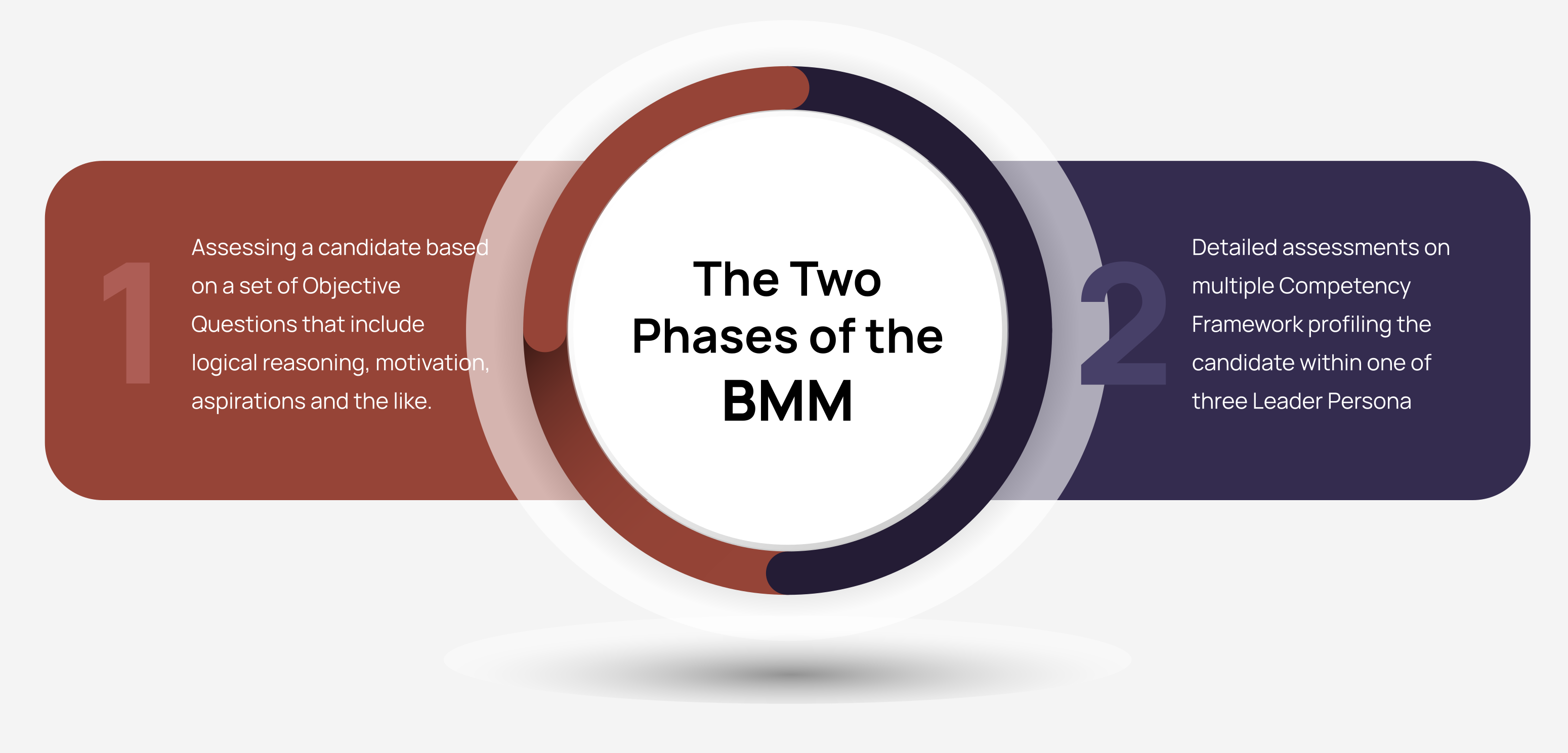 We have analysed that early-stage startups require a Creator who can build the business from ground up, while mid-scale companies need a leader with a Nurturer profile who can drive scale and contribute to product innovations. Large-scale enterprises, on the other hand, require a visionary Reconstructor who can re-create the tech and product’s long-term impact on the business goal.
Navigating disruption isn't merely about reacting to change; it's about proactively harnessing it to drive strategic transformation. Technology leaders who champion a culture of innovation, foster collaboration, adapt quickly, and maintain a clear focus on the future can guide their organisations through the complex landscape of technological disruption and position them as industry leaders.
We have analysed that early-stage startups require a Creator who can build the business from ground up, while mid-scale companies need a leader with a Nurturer profile who can drive scale and contribute to product innovations. Large-scale enterprises, on the other hand, require a visionary Reconstructor who can re-create the tech and product’s long-term impact on the business goal.
Navigating disruption isn't merely about reacting to change; it's about proactively harnessing it to drive strategic transformation. Technology leaders who champion a culture of innovation, foster collaboration, adapt quickly, and maintain a clear focus on the future can guide their organisations through the complex landscape of technological disruption and position them as industry leaders.